If you’ve been following Indian foreign policy news this year, you already know 2026 has been unusually eventful. In a matter of months, New Delhi has signed one of the largest trade agreements in its history, talked Washington down from a punishing tariff wall, and hosted a parade of world leaders — all while trying to keep its old friendships with Russia and the Gulf intact. This isn’t background noise for economists and diplomats anymore. It’s shaping the price of the phone in your pocket, the job market for engineers and exporters, and India’s weight at the table when the rules of world trade get rewritten.
This article breaks down the biggest trade and diplomacy stories driving Indian foreign policy news right now, why they matter, and what to watch for next.
7 Big Trade & Diplomacy Wins in 2026
Table of Contents
- Why Indian Foreign Policy News Matters More Than Ever
- The EU-India Free Trade Agreement
- The US Tariff Rollback
- India-Japan’s New Trade and Technology Framework
- Balancing Russia, the Gulf, and the West
- What This Means for Businesses and Everyday Indians
Why Indian Foreign Policy News Matters More Than Ever
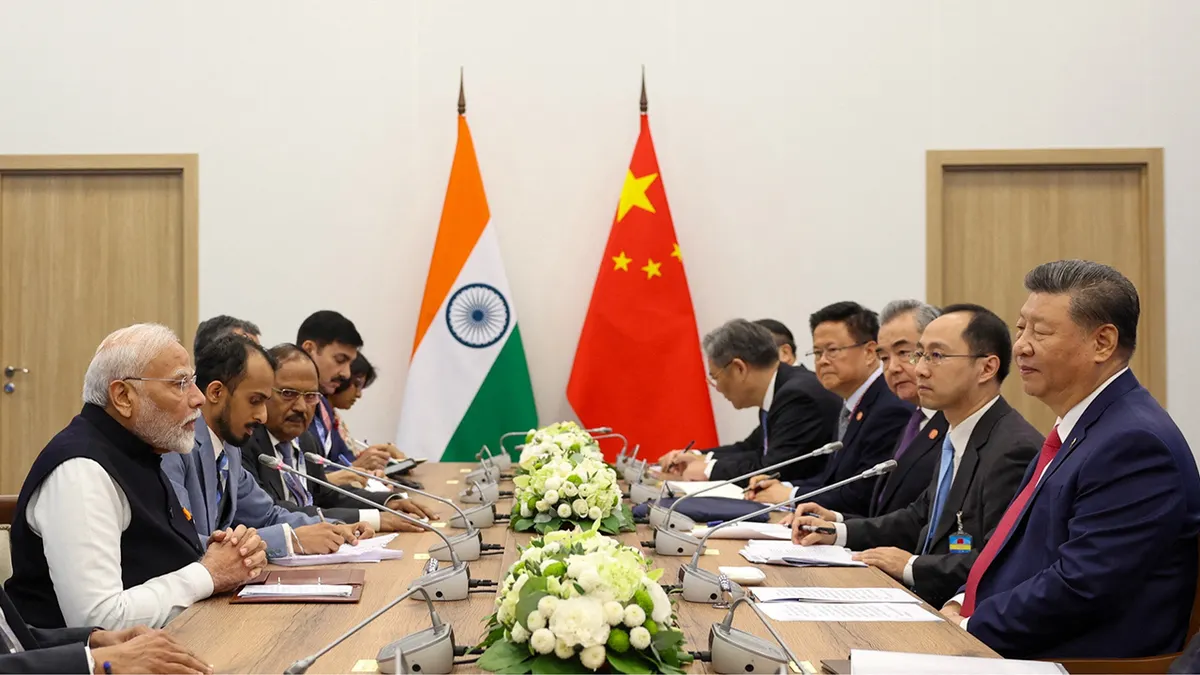
Indian Foreign Policy News PM Modi Xi Jinping India China trade meeting
Indian Foreign Policy News
For most of the last decade, foreign policy and domestic economics were treated as separate beats. That’s no longer true. In 2026, India’s diplomats and its commerce ministry are effectively working the same brief: trade deals are foreign policy, and foreign policy is trade strategy.
India’s foreign affairs leadership has repeatedly framed this shift as engaging global partners from a position of strength, pointing to a string of concluded trade deals as proof that the old, cautious India of the 2010s is gone. Officials have described the current global moment as one of the most turbulent in living memory, marked by tightening export controls and rising economic volatility.
That’s the backdrop for every major headline in Indian foreign policy news this year — and it starts with Europe.
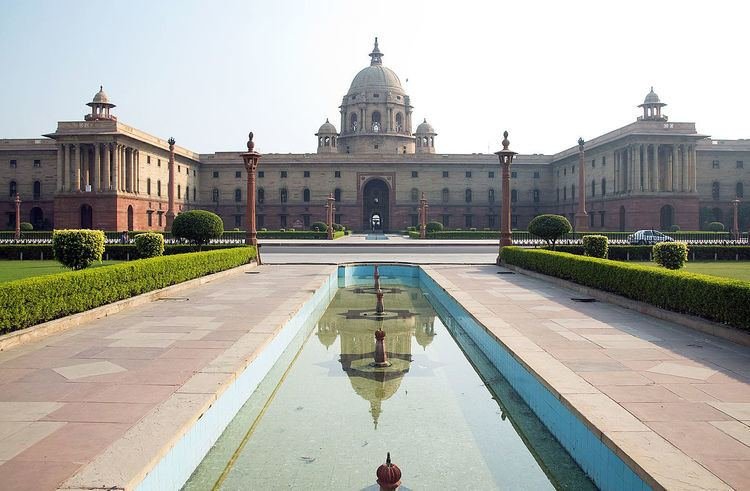
Indian Foreign Service – Alchetron, The Free Social Encyclopedia
The EU-India Free Trade Agreement: A 19-Year Wait Endshttps://www.mea.gov.in
Indian Foreign Policy News
The single biggest trade diplomacy story of 2026 is the India-EU Free Trade Agreement, concluded on 27 January 2026 at Hyderabad House in New Delhi. Talks first began in 2007, stalled for nearly a decade, and were only revived in 2022 — so this deal has been two decades in the making.
Here’s why it’s such a big deal:
Indian Foreign Policy News
European officials called it the “mother of all deals” during the signing, noting it creates a free market accounting for roughly a quarter of global GDP. The agreement still needs legal review, translation, and formal ratification on both sides before it fully enters into force, but the political conclusion alone reshapes the trade map for Indian exporters, from textiles to pharmaceuticals.
This deal also matters symbolically. The EU is one of India’s largest trading partners, and getting a deal done after 19 years of on-and-off talks signals that both sides are serious about deepening ties in a world where old alliances are being tested.
The US Tariff Rollback
Trade tensions with Washington dominated Indian foreign policy news for much of last year, and the resolution has been just as newsworthy. Following a direct phone call between the top leadership of both countries, the United States cut tariffs on Indian goods from a punishing 50% down to 18%.
India’s commerce ministry has been blunt about how this was achieved, insisting at the Raisina Dialogue that India has not compromised on stakeholder sensitivities in any trade deals while still landing a workable agreement with the US. Officials have also spoken about India building what they call a “worldwide web” of trade partnerships rather than depending too heavily on any single country.
This matters because the US remains one of India’s largest export markets, and the earlier 50% tariff rate was squeezing sectors from textiles to gems and jewellery. The rollback doesn’t eliminate friction entirely — Washington is still weighing secondary sanctions tied to countries buying Russian oil, and India has made clear it will keep making energy decisions based on its own cost and availability calculations, not external pressure.
India-Japan’s New Trade and Technology FHOMEPAGEramework
Less discussed but arguably just as consequential: in early July 2026, India and Japan finalized a bilateral trade and technology framework tied to a ¥10 trillion Japanese investment target. The agreement arrived alongside a domestic push — deregulation reforms and the PM GatiShakti digital platform — designed to prove to Tokyo that India’s administrative machinery could actually absorb capital at that scale.
The domestic groundwork for this deal was laid just days earlier, during a high-level government review involving union secretaries from every central ministry, focused on fast-tracking ease-of-doing-business reforms.
This is a pattern worth watching in Indian foreign policy news going forward: big-ticket diplomacy increasingly comes bundled with domestic reform announcements, because investors want proof the paperwork will move as fast as the press release.
Indian Foreign Policy News
Balancing Russia, the Gulf, and the West
None of this trade diplomacy happens in a vacuum. India is still buying discounted Russian oil, still maintaining defense ties with Moscow, and still courting Gulf investment — all while deepening ties with the EU, US, and Japan.
At the Munich Security Conference, India’s foreign affairs leadership described this explicitly as a bet on a “multipolar” world with many more independent, autonomous centres of decision-making, rather than a world split into two rigid blocs. Officials also stressed that UN reforms are urgently needed to reflect today’s geopolitical realities, and that India’s oil-buying decisions, like those of Europe and the rest of the world, come down to availability, cost, and risk.
That balancing act is the throughline connecting almost every story in Indian foreign policy news this year: India isn’t choosing a side. It’s trying to make itself useful — and necessary — to all of them at once.
What This Means for Businesses and Everyday Indians
It’s easy to treat this as diplomat talk, but the effects are concrete:
- Exporters in textiles, leather, pharma, and auto components get cheaper access to the EU and a lower-tariff route into the US.
- Job seekers in manufacturing and clean-tech may see new opportunities as Japanese and European capital looks for a landing spot.
- Consumers could eventually see price shifts on imported cars, wine, and machinery as tariffs phase down over the coming years.
- Farmers will want to watch how agricultural provisions in the EU deal are implemented, since this is historically the most politically sensitive chapter in any Indian trade negotiation.
- Investors and MSMEs stand to gain from smoother cross-border rules, especially as India adds new FTA partners to its growing list of 22-plus trade agreements.
What to Watch Next
A few threads worth following as this story develops:
- Ratification of the EU-India FTA — the political conclusion isn’t the finish line; European Parliament approval and India’s own Cabinet sign-off are still pending.
- The final shape of the US trade deal — the tariff cut may be a bridge to a more comprehensive agreement, not the endpoint.
- State elections in 2026 — with polls in four states and one Union Territory, expect the government to keep linking trade wins to domestic economic messaging.
- India’s space and defense trade policy, which analysts increasingly treat as inseparable from broader foreign policy given the blurred line between commercial and strategic technology today.
- India’s next FTA targets — with the EU, UK, EFTA, UAE, Australia, Japan, and the US now largely covered, attention is shifting to what comes next on India’s trade map.
FAQs on Indian Foreign Policy News
Is the India-EU trade deal already in effect?
Not yet. Negotiations concluded in January 2026, but the agreement still needs legal review and formal ratification by both the EU and India before it takes full legal effect.
Why did the US lower tariffs on Indian goods?
Following direct talks between the leadership of both countries, the US reduced tariffs from 50% to 18%, easing pressure on Indian exporters while broader trade talks continue.
Does India’s trade diplomacy affect its relationship with Russia?
Not directly. India has maintained that its energy and defense decisions are based on national interest, even as it pursues deeper trade ties with the EU, US, and Japan.
What’s the biggest Indian foreign policy news story of 2026 so far?
Most analysts point to the conclusion of the India-EU Free Trade Agreement as the standout moment, given its scale and the two decades of stalled negotiations behind it.